
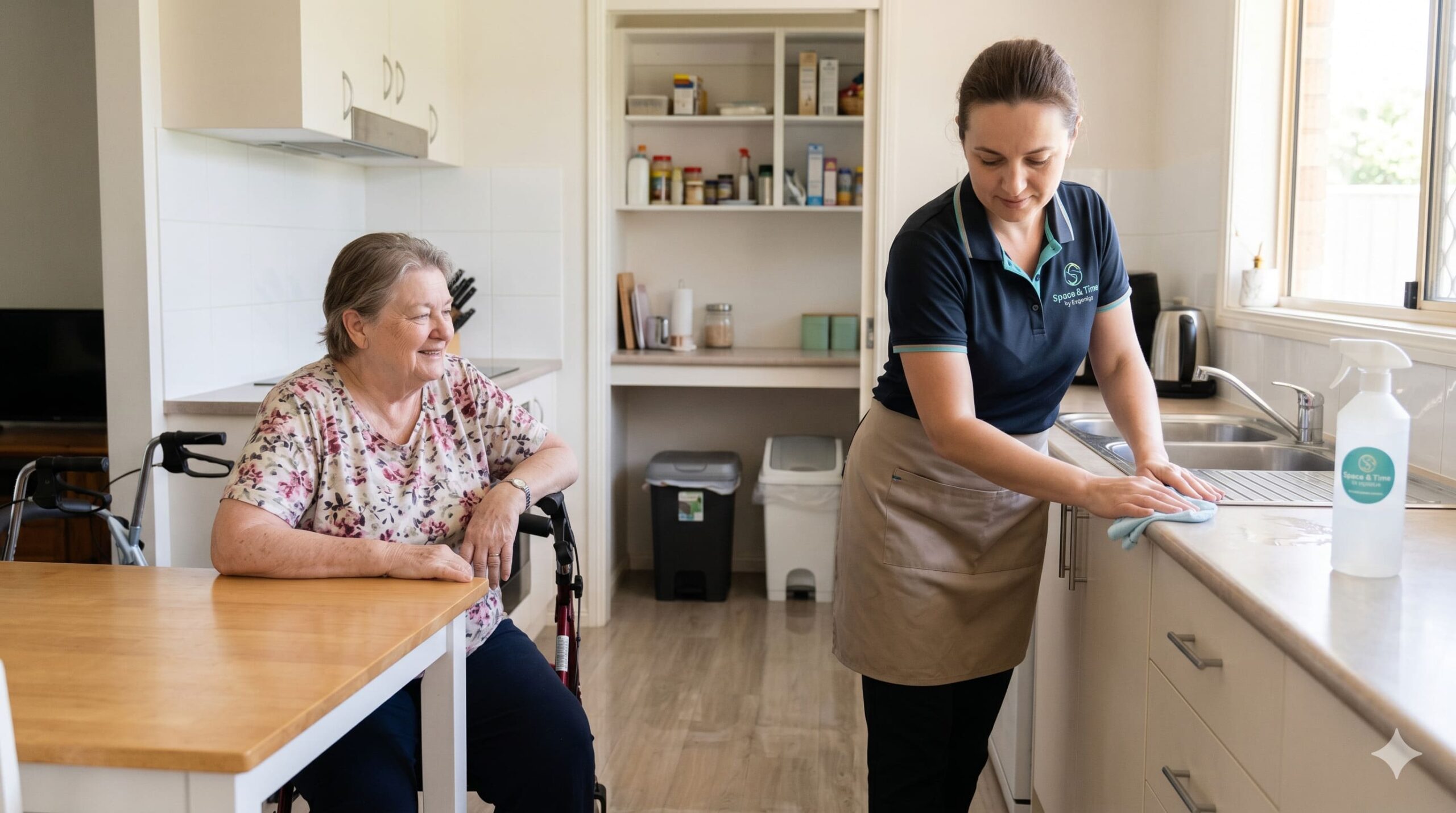
For NDIS participants, the home is more than a place to live, it’s the foundation every other support builds on. Therapy goals, daily living skills, independence: all of them are easier to reach in an environment that works with you instead of against you.
Why home structure matters for NDIS goals
Many NDIS plans include supports for daily living and community participation. But here’s what often gets missed: a cluttered or chaotic home environment quietly works against those supports. If finding clothes, preparing meals, or locating medication requires navigating visual chaos, each daily task consumes energy that could go toward bigger goals.
A structured home reduces decision fatigue, lowers sensory overload, and makes routines predictable, which is especially valuable for participants with psychosocial disability, autism, ADHD, or cognitive differences.
Organise by zones, not by rooms
Instead of thinking “the bedroom needs organising”, think in zones of activity: a morning routine zone where everything needed to start the day lives together; a medication zone that is visible, consistent, and impossible to lose; a calm-down zone kept deliberately clear of visual noise. Zones match how days actually flow, and they make support workers more effective too, because everything has a known, consistent place.

What a zone actually looks like day to day
It helps to picture one in practice. Take a medication zone: instead of tablets living wherever they were last put down, they sit in the same labelled spot on the same shelf, at eye level, every single day. There is no searching, no second-guessing whether today’s dose was taken, and no reliance on memory alone. The zone does the remembering. Support workers who rotate through can find what they need without asking, and the participant keeps a sense of ownership over their own routine rather than handing it over.
A few ways to start applying this yourself, in whichever zone matters most right now:
Pick one high-friction moment in your day, not the whole house. Give every item in that moment a single, obvious home. Label it in words or pictures, whatever is read fastest. Then leave it alone for a week before judging whether it worked, systems need a little time to become habit.
Simplify the high-use areas first
You don’t need to overhaul the whole house. Start with the three areas used most: usually the kitchen bench, the bathroom, and wherever keys, wallet and phone are supposed to land. Reducing these to simple, labelled, one-step systems delivers the biggest daily relief for the smallest effort.

“Independence isn’t about doing everything alone. It’s about an environment that makes doing things possible.”
How we can help
Space & Time provides non-judgmental, structured home support for NDIS participants across Greater Brisbane, from one-off environmental resets to ongoing maintenance that keeps systems working. Everything begins with a free Clarity Session: we look at your space and routines together and map what would genuinely help. No pressure, no judgment, just a clear plan.
Let’s build a home that works with you
If daily tasks feel harder than they should, the environment may be the missing piece, not you. Book a free Clarity Session and we’ll map out a simple, sustainable setup together, anywhere across Logan and Greater Brisbane.
Book Your Clarity Session